Free delivery on all orders over £85
Buy 6 bottles get a 5% discount
Buy 12 bottles get a 10% discount

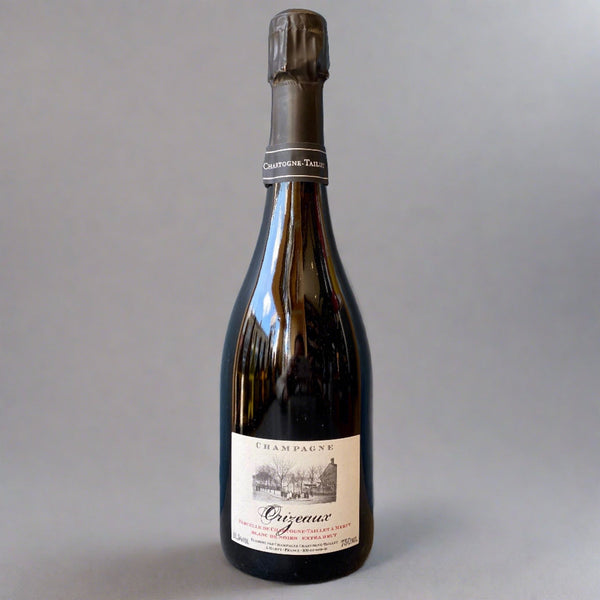
Chartogne-Taillet, Orizeaux, 2020

Single‑parcel Blanc de Noirs from Merfy, 100% Pinot Noir planted in 1970, aged in old Burgundian oak; a precise, chalk‑driven Champagne with saline lift.

  • red berries
  • chalk
  • saline
  • subtle spice

If you require more stock than we have available then please email us at hello@cavebristol.co.uk or call 01179232358

At a glance

Producer
Chartogne-Taillet
Region
Champagne
Appellation
Champagne
Grape
Pinot Noir
Vintage
2020
Country
France
Wine type
Sparkling
Alcohol
12.5%
Size
75.0cl
Farming
Organic — practising

Taste profile

Body
Medium
Acidity
High
Tannin
Medium
Sweetness
Dry

What to eat with it

  • Gougères with Comté
  • Beef carpaccio
  • Roast pigeon with gentle spices
  • Mushroom bruschetta

How to serve it

Serve
Lightly chilled (12–14°C)

Why Cave selected it

A rare, site-specific Blanc de Noirs from old vines in Merfy that marries red-fruited depth with chalky precision—an expressive snapshot of Chartogne‑Taillet’s terroir‑first approach.

About the wine


This comes from vines planted in 1961 in sandy soil just above Alexandre's parcel of Les Barres. The parcel has always been highly prized by the Chartogne family as the wine reflects both the warmth of the Thanetian sandy soil and the mineral quality of the limestone bedrock. Aged in 3-6yo barrels with 22g/l for the secondary fermentation, it’s a champagne of refinement and class.

 

About Chartogne-Taillet

Chartogne-Taillet based in Merfy just north-west of Reims and run by Alexandre Chartogne is hitting new heights of excellence. Starting out in 2006 at the age of just 23, Alexandre worked briefly with Anselme Selosse, who has heavily influenced his ideas on viticulture (although their winemaking styles are radically different). Setting out to understand all his terroirs and sub-soils (clay and sand over chalk), Alexandre has worked closely with renowned soil analysts Claude and Lydia Bourguignon, comparing the still wines he made from each lieu-dit to 17th-century family records of barrels of wine from the same terroirs. These were sold to the monks in a local abbey, who knew their stuff and paid up to ten times more for wines from certain parcels, and Alex notes that there was an incredible correlation between the plots highlighted for their qualities by the Bourguignons, and the monks preferred parcels. Focus here is always on the health of the individual soils – soil and place are of vital importance. Chickens and sheep are allowed to roam around in the vines to eat bugs, grubs and control pests, and help manage weed control. Grass is partially allowed to grow, ploughing is done by horse (50% of the surface) or light tractor to avoid soil compaction, no herbicides or pesticides, bouillie bordelaise against oidium/mildew but no certification although organic farming has been practised at the domaine since 2002

Search our shop