Free delivery on all orders over £85
Buy 6 bottles get a 5% discount
Buy 12 bottles get a 10% discount

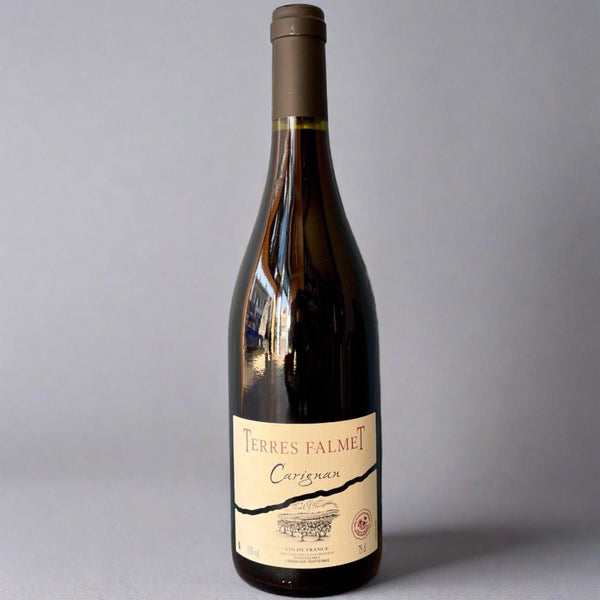
Domaine Des Terres Falmet, Carignan, 2024

Old-vine Carignan from Yves Falmet near Saint-Chinian: hand-picked, destemmed, four-week maceration and 18 months in tank yield a deeply coloured, spice‑tinged, black‑fruited Vin de France red.

  • blackberry
  • black plum
  • black pepper
  • liquorice

If you require more stock than we have available then please email us at hello@cavebristol.co.uk or call 01179232358

At a glance

Producer
Domaine Terres Falmet
Region
Languedoc
Appellation
Vin de France
Grape
Carignan
Vintage
2024
Country
France
Wine type
Red
Size
75.0cl

Taste profile

Body
Medium
Acidity
Medium
Tannin
Medium
Sweetness
Dry

What to eat with it

  • cassoulet
  • grilled lamb chops with rosemary
  • Toulouse sausages on the grill
  • ratatouille or roast aubergine
  • hard sheep’s cheese (Ossau‑Iraty)

How to serve it

Serve
Cool room temperature (16–18°C)

Why Cave selected it

A consistent Cave favourite: expressive old‑vine Carignan offering authentic Languedoc character, excellent value, and low‑intervention élevage from a sustainably farmed estate (HVE).

About the wine


Yves' grapes are harvested by hand, he then destalks 100%, ferments using pump overs with a five weeks maceration, aged in tank for a minimum of 18 months and bottles with around 30mg/l of total sulphur. Cracking Southern French wine that is a mainstay for us at Cave.


About Domaine Terres Falmet

Emanating from the Aube where his brother Joel produces champagne, Yves Falmet initially studied science in Montpellier and so discovered Languedoc. He gained a degree in biochemistry and carried out a year of research with the INRA. He then travelled around the world picking up experience in California, Australia, New Zealand, Germany and Hungary before returning to France. In 1996 with few resources and the aid of a loan, he purchased a few hectares of old bush vines (some of which are 90yo) on northern facing limestone-clay hillsides in the north of the St Chinian appellation between the villages of Creissan and Cebazan. Here the hillsides were so steep that nobody wanted the land – the eastern part of the vineyard had already been abandoned and the rest was likely to follow. He immediately turned his back on conventional viticulture as too polluting but also felt that certain aspects of organics weren’t rigorous enough. He, therefore, adapted his own ecological but rational approach to viticulture, where thought, pragmatism and open-mindedness are the linchpins of his ethos.

Search our shop