Free delivery on all orders over £85
Buy 6 bottles get a 5% discount
Buy 12 bottles get a 10% discount

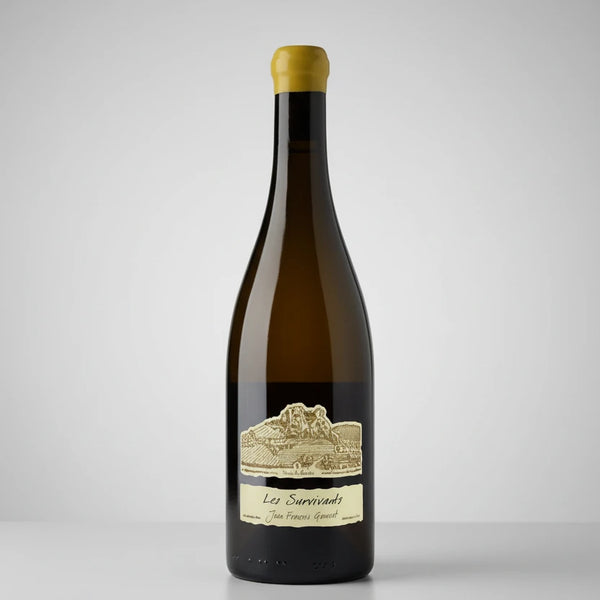
Domaine Jean-François Ganevat, Les Survivants 2021

Chardonnay from the Côtes du Jura assembled from fruit that survived the severe 2021 frosts, aged for an extended period on lees in large demi-muids. Bright citrus and apple with a chalky, saline finish.

  • lemon zest
  • ripe apple
  • white flowers
  • saline, chalky mineral

If you require more stock than we have available then please email us at hello@cavebristol.co.uk or call 01179851851

At a glance

Producer
Domaine Jean-François Ganevat
Region
Jura
Appellation
Côtes du Jura
Grape
Chardonnay
Vintage
2021
Country
France
Wine type
White
Alcohol
13.0%
Size
75.0cl
Farming
Organic — practising Biodynamic — practising

Taste profile

Body
Medium
Acidity
High
Tannin
Low
Sweetness
Dry

What to eat with it

  • roast chicken with morels
  • seared scallops
  • fish in beurre blanc
  • mushroom risotto
  • aged Comté

How to serve it

Serve
Cool (10–12°C)

Why Cave selected it

A rare domaine Chardonnay created in response to the 2021 frost losses, combining extended lees ageing in demi‑muids with Jura’s hallmark saline minerality—distinctive, textural and very limited.

About the wine

Les Survivants — “the survivors” — was created after the severe frosts of 2021 left Jean-François Ganevat with tiny quantities of Chardonnay across the domaine. The surviving fruit from several parcels was brought together to produce this rare Côtes du Jura cuvée.

Fresh apple, citrus peel and white flowers lead into chalky, lightly smoky notes. Extended ageing on the lees in demi-muids gives the wine depth and a gently creamy texture, balanced by vivid acidity and a long, saline mineral finish.

Serve cool rather than fridge-cold and allow it time to open in the glass. Excellent with roast poultry, shellfish, fish in beurre blanc, creamy mushroom dishes or aged Comté.

Notes on the producer

Jean-François Ganevat returned to his family’s domaine in Rotalier in 1998 after gaining experience at Domaine Jean-Marc Morey in Chassagne-Montrachet. He now produces an extraordinary range of highly individual Jura wines from small, biodynamically farmed holdings.

Long élevage, indigenous fermentations and restrained sulphur use are central to the domaine’s approach. The wines combine the concentration and texture associated with fine Burgundy with the energy, salinity and distinctive character of the Jura.

 
* Please note that because there is limited stock of this wine it is not subject to any further discount. 

About Anne et Jean-François Ganevat

Jean-François Ganevat—known as Fanfan—is making wine with the inspired magic of an alchemist. His wines occupy the better part of the hamlet, filling picturesque country cottages with barrels and barrels of his diverse, yet traditional creations. He comes from a long line of winegrowers, dating as far back as 1650, although the family supplemented their grape-growing with a dairy that produced milk destined for the local cheese, Comté, until 1976. After working both for his father and for the prestigious Domaine Jean-Marc Morey in Chassagne-Montrachet, Jean-François returned to the Jura in 1998 to take over the family domaine. Today, he is joined by his sister, Anne. With only eight and a half hectares under vine, the family has seventeen different local varieties planted of both red and white grapes—an incredible amount of variation to consider for holdings of such small size. For such a fervent perfectionist and insatiable lover of details as Jean-François, the decision to have the domaine certified as biodynamic was a natural choice. Jean-François creates a stunning number of cuvées, ranging between thirty-five and forty every year! His methodology goes far beyond the details of the average vigneron. For some, his process would be maddening, as each cuvée calls for a highly individualized élévage. Jean-François is committed to minute doses of sulfur, so low in fact, that many fear it hurting the wines during transport. He curbs this issue entirely by aging many of his whites on the lees for extended periods of time, anywhere from two

Search our shop